Nikolai Grundtvig

Nikolai Grundtvig (1783-1872)

On September 2, the ELCA commermerates Nikolai Grundtvig, also refered to as NFS Grundtvig. The son of a Lutheran pastor, Nikolai Grundtvig was born in Udby, Denmark in 1783.   Though brought up in a religious household and educated in the European Enlightenment tradition, Grundtvig’s views on both education and religion evolved over his lifetime.  Through his many writings, he heavily …

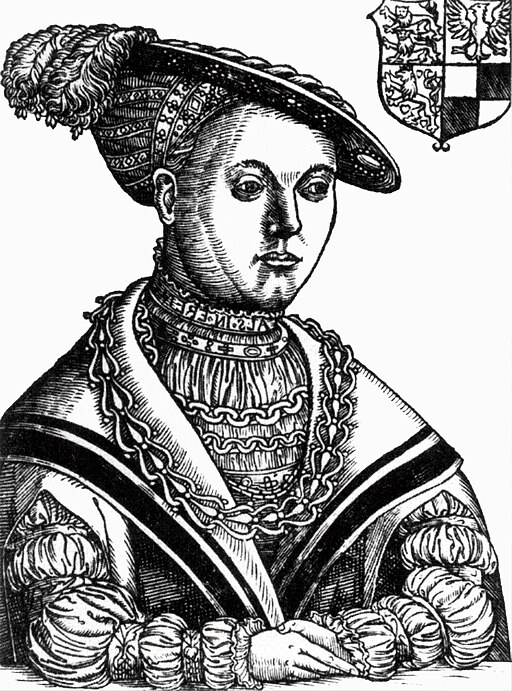
Elisabeth, Duchess of Brunswick-Calenberg-Göttingen

Elisabeth, Duchess of Brunswick-Calenberg-Göttingen (1510-1558)

The granddaughter of King John I of Denmark, Elisabeth was born in Colin (now combined with Berlin) in 1510 to Elector Joachim I of Brandenburg and his wife, also named Elisabeth.  Young Elisabeth received a religious and humanist education extensive enough to include Latin. In 1525, at the age of 14, Elisabeth married the much older Duke Eric I Brunswick-Göttingen-Calenberg. …

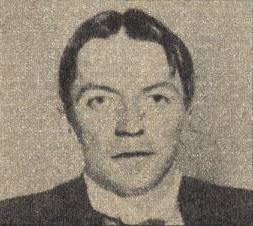
Kaj Munk

Kaj Munk (1898-1944)

Kaj Harald Leininger Petersen was born in Maribo, Denmark on January 13, 1898 to Carl Petersen, a tanner, and his wife Mathilde.  Following the death of Carl in 1899 and Mathilde in 1903, Kaj went to live with Peter and Marie Munk in Opager,about 10 miles from Maribo, and took on their last name, becoming Kaj Munk. In 1917, Munk …

Florence Nightingale

Florence Nightingale (1820-1910)

On August 13th, the ELCA commemorates Florence Nightingale.  Though Nightingale was a practicing Anglican, and not Lutheran, her nursing training was from a Lutheran institution. Born in 1820 in Florence, Italy, Nightingale belonged to a very wealthy British Family.  They subsequently returned to England in 1821.  Nightingale’s father, William, personally saw to the education of his daughters.  According to a …

Rev. Paul Henkel

Paul Henkel (1754-1825)

Paul Henkel and his sons founded the first Lutheran publishing house in the United States of America, Henkel Press. Paul Henkel was born in the North Carolina frontier in 1754.  Then, as fighting in the French and Indian War to the area, his family moved to Virginia in 1760.  While there, he married Elizabeth Negeley and learned the cooper trade.  …

Johann Martin Boltzius

Johann Martin Boltzius (1703-1765)

Johann Martin Boltzius was born in 1703 in Forst, Germany.  His parents worked as weavers and accordingly earned a modest living.  As the recipient of a scholarship to the University of Halle, Boltzius studied Lutheran Pietism.  Following his graduation, Botlzius worked at the Latin School of the Franke, which educated orphans, with an emphasis on Protestantism. In 1733 the school’s …

Elisabeth Cruciger’s hymn “Herr Christ, der einig Gotts Sohn"

Elisabeth Cruciger (c. 1500 – 1535)

Born in approximately 1500 to a Polish noble family, Elisabeth Cruciger (nee von Meseritz) entered religious life as a nun at Marienbusch Abbeyin Treptow, Pomerania at a young age.  The abbey belonged to the Order of Canons Regular of Prémontré.  Significantly, this particular order saw the spiritual life of women as equal to that of men.  Elisabeth learned Latin and …

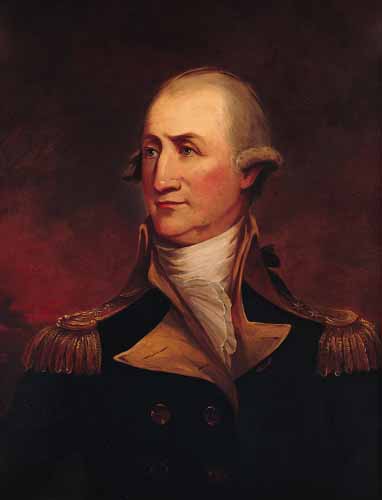
Peter Muhlenberg

Peter Muhlenberg (1746-1807)

“There is a time to pray, and a time to fight!” –Peter Muhlenberg, 1776 Born in Trappe, Pennsylvania Peter Muhlenberg attended the Philadelphia Academy, the predecessor of The University of Pennsylvania.   His father, Henry Muhlenberg, the “Father of American Lutheranism,” determined that Peter should study theology and join the family business as a Lutheran pastor.  Henry sent Peter, age …

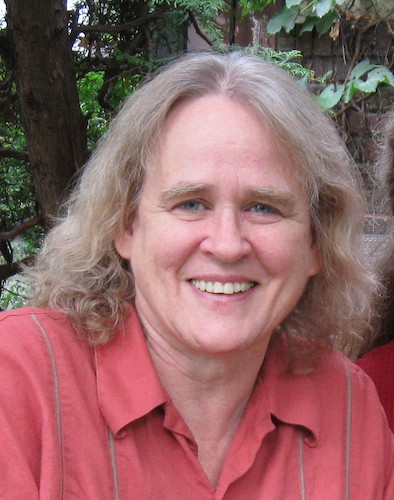
Ruth Frost

Rev. Ruth Frost (1947-)

Born in Decorah, IA in 1947, Ruth Frost followed her father around Lutheran College where he worked as a Professor of Religion.  In her third grade year, Professor Frost took a position at Lutheran Seminary.  So, the family moved to St. Paul, MN.  She recalls, “So, my interest in ministry was right out the gate, you know, before I knew …

Rev. Phyllis Zillhart

Rev. Phyllis Zillhart (1957-)

Born in Canby, Minnesota in September of 1957, Rev. Phyllis Zillhart recalls belonging to a thriving Lutheran church whose members came both from the town of approximately 2,000 inhabitants and the surrounding farming community.  Young Phyllis’s paternal family attended church on holidays and special occasions. In contrast, her maternal family helped found the Lutheran church their nearby community and incorporated …